Knave 2e - Post Campaign System Review
I found Knave 2e gave the butteriest smooth character creation and onboarding I've seen, even compared to story games. However, from there it started to falter. Often sacrificing clarity in its rules for brevity, it left me feeling abandoned as I plowed into further sessions with the same PCs. Despite these frustrations, it unfurled unique nuances I've not seen in other OSR games that have gone overlooked amidst Knave's frenzied imitation of Dungeons and Dragons - that I feel deserve to see sunlight.
Notably it was my first excursion into running D&D (or something like it) ever. I've been running RPGs for just shy of 13 years now but I'd been a story game maverick (and a D&D hater) until pretty recently when some of my players convinced me to join as a player in their campaigns. I picked up Mork Borg at about the same time but bounced off it (confused, mostly) before it reached the table. I have since played a lot of D&D and OSR games.
All pictures in this post are Peter Mullen's absolutely gorgeous illustrations that you will find peppered throught Knave. Lovely stuff. Also Knave's logo is amazing. That one's by Tim Hastings
What Is Knave 2e?
Created by YouTuber Ben Milton (a.k.a. The Questing Beast) - Knave 2e is a chassis for adventures that are compatible with (and evocative of) Basic and Expert dungeons and dragons (the introductory box sets from the 70s). It is one of innumerable games that posit their inclusion in the OSR (Old School Revival/Renaissance/Resurgence/Relitigation...) movement.
Knave 2e is notable for also including a large array of d100 tables laden with standard fantasy fare to help you randomly generate your own not-quite-D&D worlds.
A Strong Start
I didn't, actually, only run one campaign with Knave. Over the last two years I've ran a number of one shots and started two campaigns in parallel with it (that reached 5 and 10 sessions respectively). And I must say that the session 1s with Knave have been a consistent delight.
The trick here is that character creation can all be randomly rolled, and that it gently notches the commitment needed by the player up with each step. Since it's random - the paperwork can all be done by the GM, with the player just having to figure out how to read a d100.
The first step is simple, roll a d100 thrice for a name (handily I can just read the results for both the male and female name tables to ask "Do you want to be called Jennifer, Andrew, or something else?"). A few players complained of the explicit gendering of the names and I agree - it's a lazy (and unnecessary) assumption for a fantasy game. Also, selfishly, a table of 100 good genderless names would be GMing gold dust. (What do you know? An amazing blogger saw this post and made that list, Thank you Fran!!!)
Onwards, then, to a slight uptick in complexity. Backgrounds! Roll a d100 twice to get two backgrounds and then write down a short list of tat (and I do mean tat) for each into your inventory. I found the backgrounds were universally well received. Finding out you're a Bookbinder Pirate, a Priest Chef or a Cultist Spy had my players chortling and then doodling their characters with surprising consistency. The backgrounds came up frequently in play too. They hold all the potency of a full class with rules that fit comfortably into this next sentence: you get advantage on rolls with a relevant background and you get items corresponding to your background. The stingy slots on your character sheet mean that every item has to justify its place in your dungeoneer's kit. Being the one person in the party with a mirror felt as meaningful as any unlocked skill. The item lists are carefully designed to provide no items that are transparently useful to a sword swinging adventurer - but instead (very successfully) encouraged lateral thinking from my players.
Once more into the breach with skill points. 3 per level, to assign into your standard D&D statline of STRength, CHArisma, WISdom, CONstitution, DEXterity and INTelligence. You can roll a D6 for each or pick and choose. Knave does an excellent job of eliminating the hierarchy in D&D's stats. You WILL chafe against the restrictions of those you don't pump points into. Unfortunately, however, I found the low levels were often restricting to the point of duldrum, so I'd highly suggest you start the players at level 3 or level 5 rather than level 1.
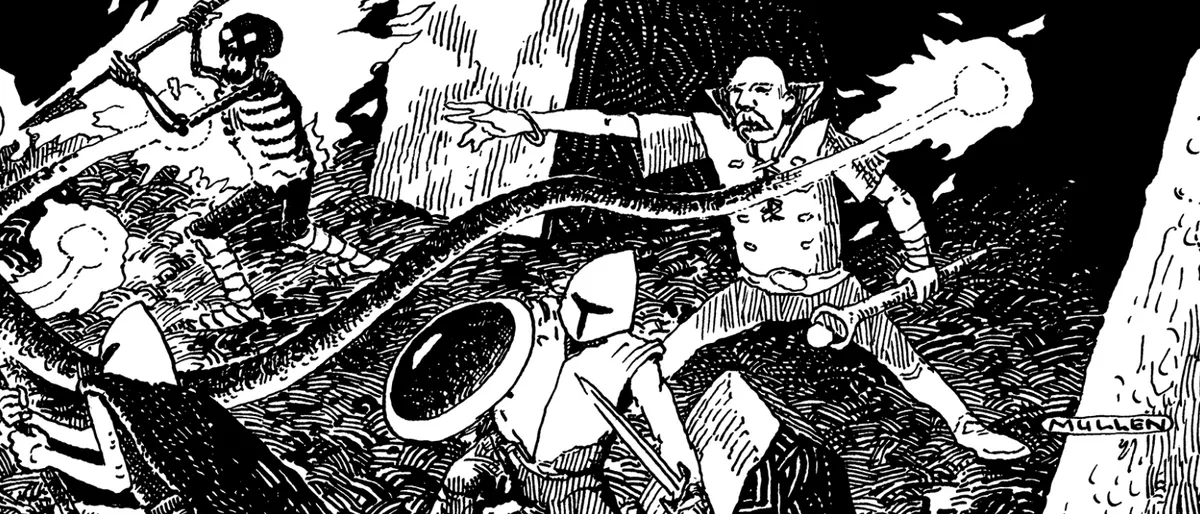
Then magic! My personal highlight of the whole game. If you have any INT you get random spellbooks equal to that number. Each can be cast once per day, takes up one slot and you can cast total spells per day equal to your INT. Simple, but very effective. Like the items, the spells are exclusively niche utilities. The game leverages its random tables with optional Chaos Spellbooks that gain a new random spell each time they're used, which my players ADORED. To the point where I drafted up a whole chaos magic system where they could capture these random spells in items. The spells were an absolute treat, with so many weird and wonderful tricks at their disposal, each one felt like a potent character defining facet. My first campaign was defined by an early Chaos Spellbook roll giving a spell for "duplicating discs". A coin forging empire was soon well underway.
Finally, a shopping list of useful items to fill out your remaining slots and you're done! A new character rolled up in less than five minutes (or less than 60 seconds if you know what you're doing). These rules helped me get some very unexpected people in my life to the table: both my parents, both my siblings, assorted randomers who got invited to sessions without my foreknowing and even my fiancée who absolutely loathes tabletop RPGs. Nightmare scenarios for any other system that Knave shouldered effortlessly. The trick here, I think, is that it asks so little commitment. Players have authorship over a character before they can even get the words "I don't understand this" out their mouths. No scary numbers, verbose skills, confusing lore or gut-chilling improvisation. No way to get it wrong. Just a few simple choices and you're playing something that feels close enough to D&D that you're taking photos to send to your kids. Not even the one page RPGs I've played have pulled that off.
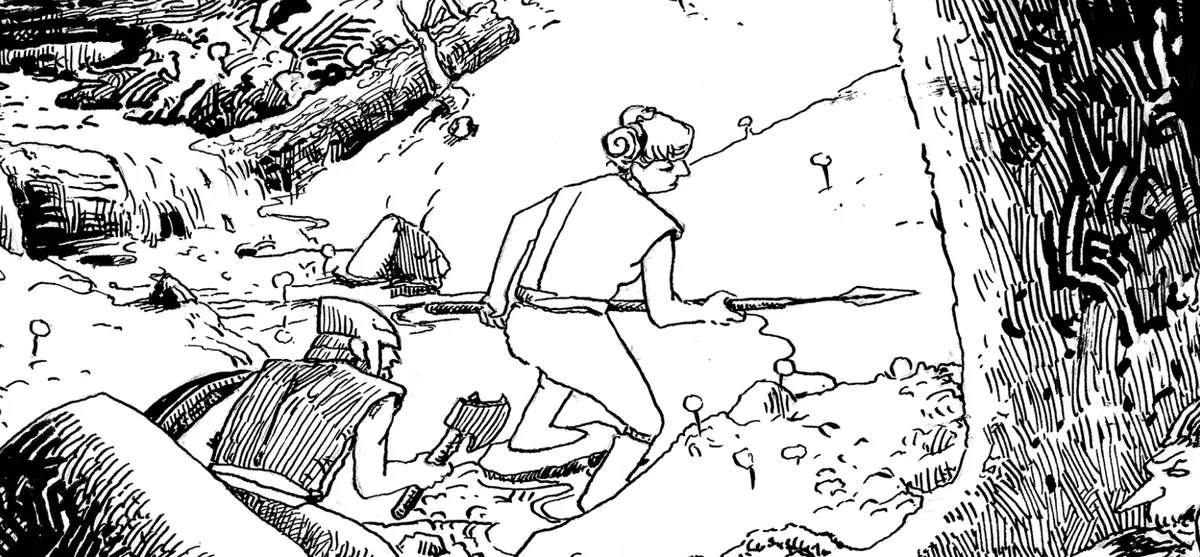
Beyond the rules already covered, Knave pulls together a collection of advice from across the blogosphere into a cohesive whole that feels close enough to D&D with a ruleset smaller than some 5e stat blocks. An impressive feat. Overall it emphasises player skill over character skill and for GMs it emphasises building a sandbox over a narrative.
For a classless game with such simple rules, the characters felt very asymmetric. Each spell, point, item or background was pride of place due to how limited the characters are otherwise. Bottlenecking everything through the inventory system immediately pulled the players' focus to delving dungeons to get more stuff to get better and had them pulling their hair out at the choices they had to make. It's incredibly sharp in play for a ruleset that fits in its entirety on two sides of A4.
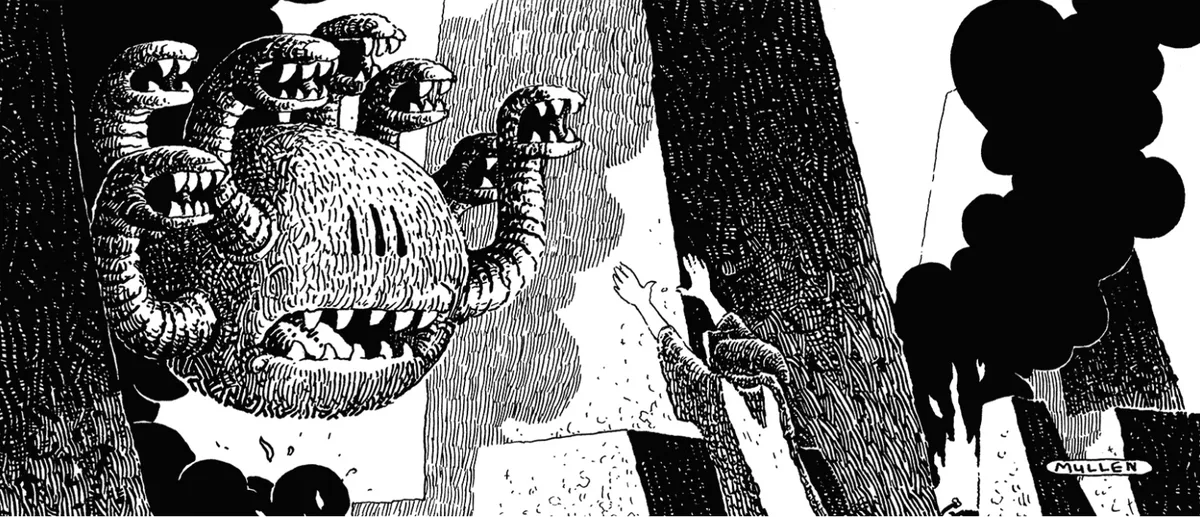
As a product and book Knave is lovely. The tables are fantastically useful - generating fascinating specimens of anything your campaign requires. Peter Mullen's art is gorgeous as always (retro but not kitsch, evocative but not stereotypical). And the control panel layout is pretty good. The rules are terse but give you what you need at a glance. Mostly.
Beyond The Honeymoon
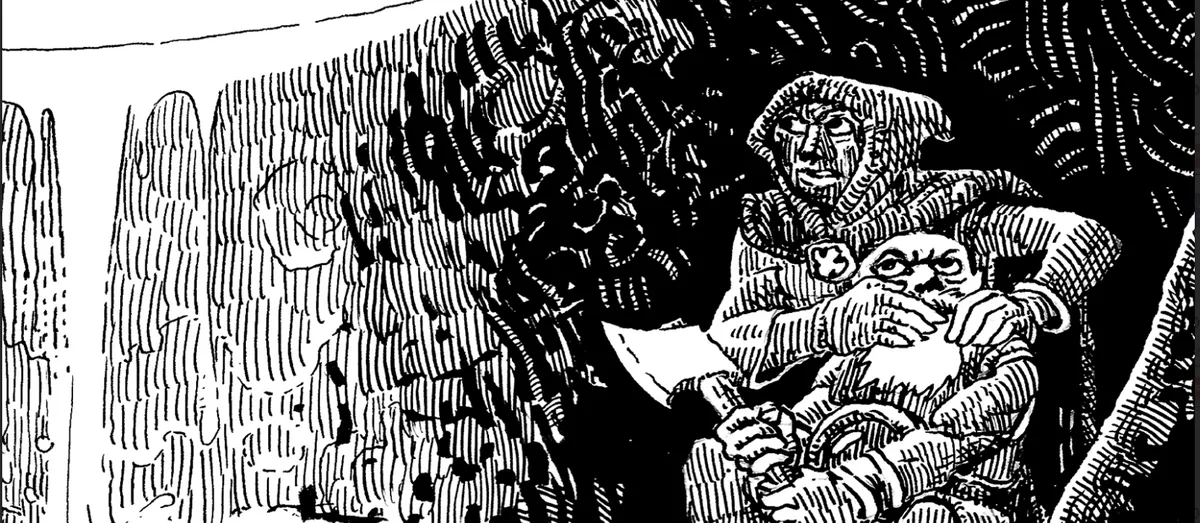
Unfortunately, some of the shine rubbed off as we played on. As I got into later sessions with Knave, I found frustrating voids in its sparse guidance.
Chief among these oversights, for my campaigns, was the lack of any treasure placement rules. Though this may seem minor, treasure is at the heart of Knave. Levelling up is tied to the value of items retrieved, and players have no power save for what they buy, borrow or steal. Without guidance, there's no handrail for campaign pacing or player power levels. Three sessions in, the players had been fearfully hobbling around the world without a penny to their name and I felt at a complete loss. I ended up having to pull advice from the blogosphere to cover the gaps. Retrospectively, I could squint my eyes and see an approximate loot pricing guide and a vague admission that what I encountered is the intended mode of play hidden as dual readings of several other sections, but at the time this went right over my head. It just wasn't enough for me to feel comfortable with the choices I was being forced to make as GM, and I would have really appreciated something more definitive.
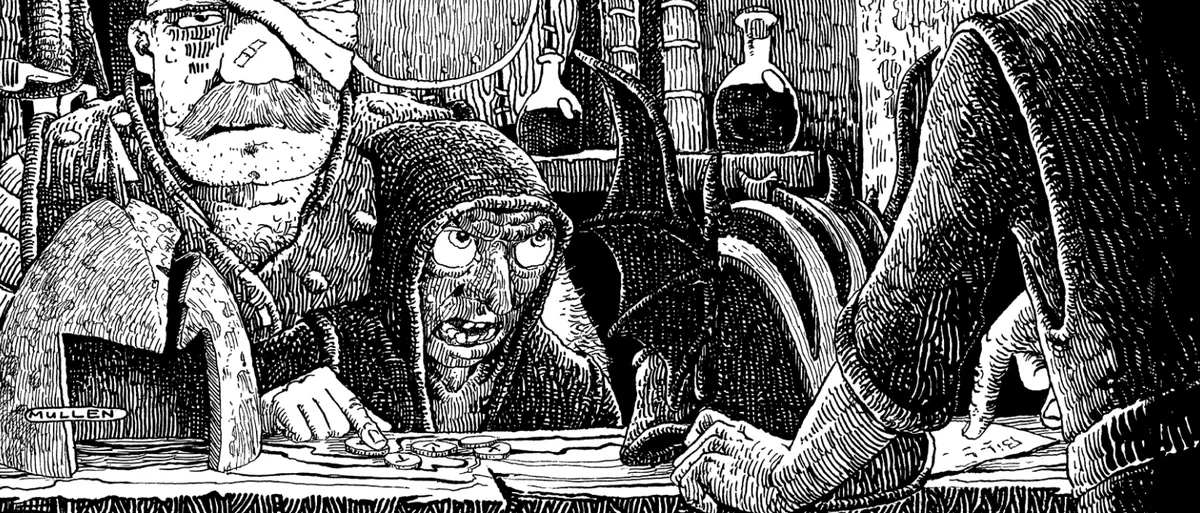
Combat was dull once the swords came out. Knave 2e goes to great pains to force combat to be lethal and swift mechanically - but as a result has left the actual fighting far too bare bones. As written, the game's plinky plonky "I hit him" combat was incredibly weak. If you're not careful, sessions can slow to a mind numbing crawl for any combat that extends more than one round. God forbid the players fight anything that can't surrender (undead, especially, were a bane for my sessions). Each turn you Attack OR maneuver. All weapons as written are interchangable. NPCs only surrender based on a die roll. If I wasn't on the ball they would just roll initiative, the walls would close in and they'd mumble "I hit him" until the boardgame cafe closes. Just claiming that combat isn't the solution doesn't make it so, and I think that Knave could have done far more here without significantly increasing its word count by giving the GM more room to make rulings as part of the back and forth of combat.
The wounds system never felt amazing for me either. The order of your items doesn't matter until PCs hit 0hp, and then armour starts popping off them like we're playing buckaroo, and we're having to pause to erase and swap items because of course nobody was thinking about the order they wrote things down in. They enter a death spiral and are forced to run half naked for the door and regroup. It's fine. It works. It lowers the likelihood of one hit deaths that could ruin their evening unless they do something really daft (like getting crushed under a dragon like one of my players) - but it always ended up feeling quite clunky in play.
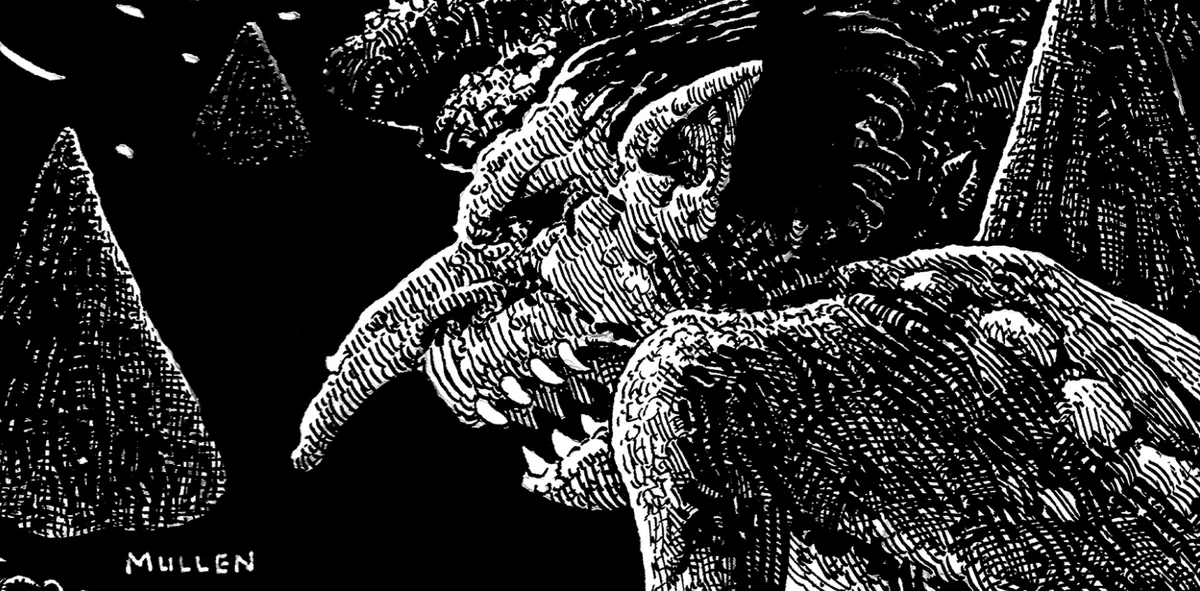
Instead of the (admittedly gorgeous and inspiring) maps in the back, two page spreads on building dungeons and running combat would have been far more appreciated. Unfortunately that's not the only frustration I had with the book. The d100 tables look identical at a glance and take up a large portion of the game's pages. The nice tidy ruleset becomes a headache to navigate during play as you have to flip past page after page of tables. As a result Knave has earned the ignoble title of the thinnest book I've had to deploy page markers on. If the tables were all at the back, all restricted to the right hand side of each spread, or had some of Peter Mullen's gorgeous art adorning them perhaps they'd have been easier to filter through. From there, a few other questionable omissions like missing stat blocks for a third of the named monsters in the book at this point just made me quite sour.
Getting The Most From Knave
Knave will take you mostly painlessly through your first session, and will provide inspiration galore for making your own campaign. Making that campaign tick, though, is going to take some elbow grease. Read the rules like a lawyer and don't be tempted to skim. Every word is on these pages for a reason.
Since running the game, I've learnt from nerds online that slots work best if you don't try to explain them. A sword is one slot regardless of what you do. Keep slots abstract and don't let players try to 'solve' them. Though I did find some Adventure Game style "combining items to make new things and also reduce slots" was quite fun. Also note that it says "...groups of small items that would fit in one hand, take up one slot" - I somehow (embarassingly) missed this until just now while writing this post. I had to cut a whole paragraph bemoaning how confusing I found the slot system because this would have helped a lot.
For loot, I've made my own table for modifying Knave's items and generating prices. If you make something custom, you can extend Knave's own advice and take the daily cost of a hired hand at the skill level needed to make an item and multiply by the days required to make it for a ballpark price. It's not the most elegant system but it works well enough. Courtney Campbell's Treasure is gold dust for placing loot for an OSR game.
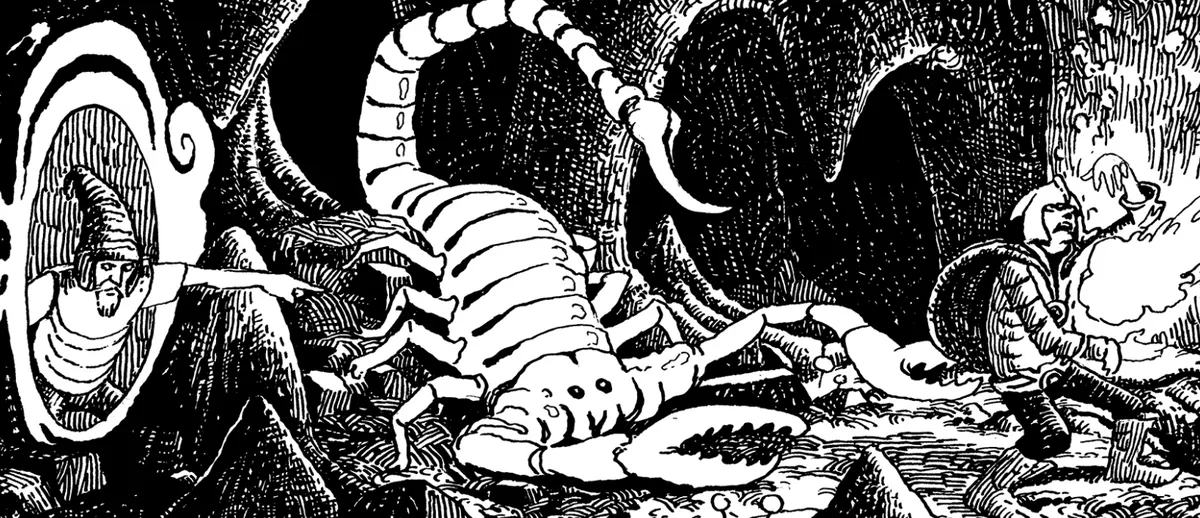
Knave: Expanded Lore by Noobirus patches a lot of the gaps in Knave's rules and gives some neat ideas for expanding it further. There's guidance for scaling treasure hoards by monster level (which I found essential for fixing my pacing woes) and generating balanced encounters. It also returns the missing stat blocks for the game's d100 monster table. Furthermore, it provides guidance for point crawls and house rules for adding fun character skills. Essential reading if you want to extend your one shot into a campaign.
Advanced Knavery by Lee Talman (that Google also tells me made the Knave Foundry module which I found quite handy) provides a varied bucket of house rules for Knave. Most I wasn't too taken by, but I raided its combat tweaks and our fights became much more engaging as a result.
Furthermore, when running combat I'd recommend you always ensure that monsters aren't just fighting for the sake of it. (here's a good post on this topic). Give monsters an alternate goal to shake the flow of fights up. Make it VERY clear to players that just because there's a fight doesn't mean there'll be a reward (even breaking the 4th wall to say "Yeah you can see these guys don't have anything on them, you'll just be wasting your time fighting here").
For the optimal one shot, I'd recommend you grab a level 3-5 B/X compatible module without a big focus on combat and start the players at level 3. Milton's own The Waking of Willowby Hall was a fantastic fit that my players couldn't get enough of.
In Conclusion
Knave makes an incredibly strong impression for so slight a ruleset, and gives gameplay that is unmistakably D&D with two pages of rules. But I personally won't be running a campaign with it again, opting instead for braving the more direct retroclone Old School Essentials. I've often found myself referring to OSE to patch holes so figured why not just embrace it. I found Knave failed to give sufficient GM guidance to allow me to confidently extend its rules, despite being reliant on that work to flourish. I'll not abandon it completely, but will be reserving it for one shots and Introductory games. These introductory sessions are where Knave shines. It's inarguably best in class for getting new players from "Is the d6 the normal one?" to "I push the stuffed owlbear into the fire!" in record time.
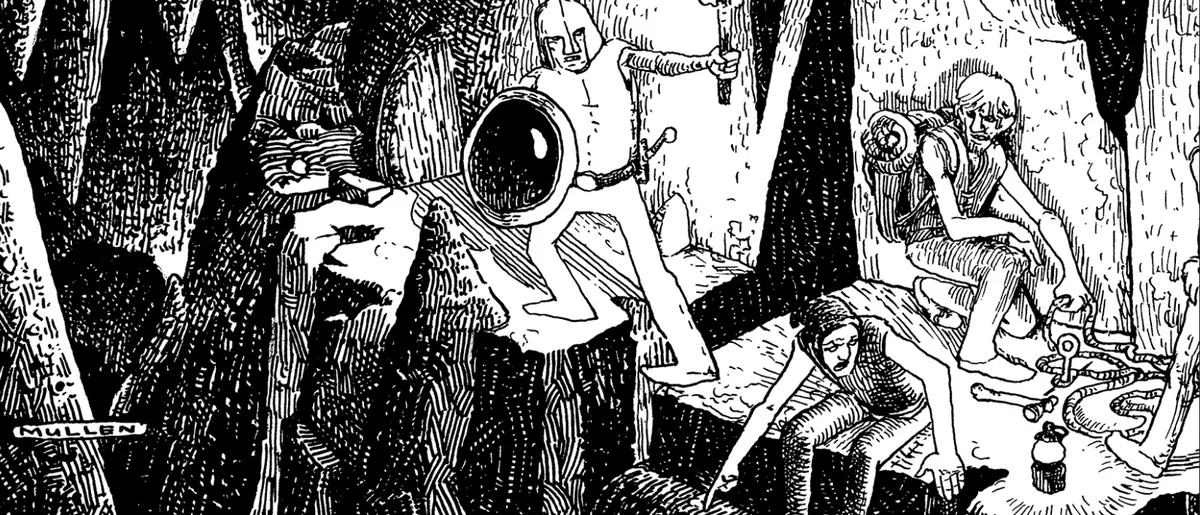
You may feel that my criticisms are slight and overwrought. I agree. My players loved it and had fun regardless, but I rarely felt as confident in my rulings as I'd have liked. My main issues can be attributed as much to Knave being my first go at running a more traditional D&D campaign as they can to Knave itself. A more experienced OSR GM could have quite easily patched over these problems and made Knave worthy of a sprawling fantasy epic.
However, in as crowded a space as the OSR - why would you bother? Cairn, The GLOG and Mythic Bastionland - to name but a few, are close enough to Knave that it can feel more expedient to just switch systems than mess about with hacking the game you have. Notably, none of these game's share Knave's fear of clear GM guidance and are all better supported by their ardent communities. As a result I'm tempted to ask: why buy Knave?
But then I think back on my players, most of whom had never played an RPG before - lighting up as they spread glue around a doorframe or trick a giant into thinking they're a horse. I think of them taking photos of the battle map to text loved ones "Look at this, I'm playing D&D!". Players who probably would have balked at Cairn's bog witches, Bastionland's age rules or The GLOG's Google Drive aesthetic rolling dice like the best of them.
In the end, I'm sure it was Knave's familiar setup and incredibly minimal approach that made it possible for them to give it a go without fear, and it was Knave's nail biting randomisation and inventory heavy twists to D&D's formula that got them to stay. If you're looking to introduce a complete greenhorn to the hobby, I don't think you can do much better. But when they inevitably come back for session 2 - be prepared to do a lot of hacking.